
Wirehaired Slovakian Pointer
Slovenský hrubosrstý stavač
The Wirehaired Slovakian Pointer is a versatile hunting dog bred to find, point and retrieve game on land and in water, and it brings that working drive into the home. It is intelligent, energetic and strongly bonded to its people, happiest when it has a job to do and plenty of room to use its nose. This is a genuine athlete that needs substantial daily exercise and mental work; an under-exercised one quickly becomes restless and difficult. The harsh wire coat with its beard and bushy brows is fairly low-maintenance, needing a regular brush and the occasional tidy rather than constant grooming. It suits active, outdoorsy owners, ideally those who hunt or who will commit to long walks, running and training. It is not the dog for sedentary households, small apartments, or people away at work all day, and its size and energy can overwhelm a first-time owner unprepared for a working gundog.
Size
Medium to Large
Lifespan
10-14 years
Group
Group 3 - Gundogs
Height
Male: 61-66 cm (24-26 inches), Female: 56-61 cm (22-24 inches)
Weight
Male: 24-30 kg (52-66 lbs), Female: 20-25 kg (44-55 lbs)
Origin
Slovakia
Compatibility & care
How this breed fits into life with you
Scores are out of 5. Tap the help icon next to any trait to see what it really means.
Personality
How they think and behave
With family
Who they get along with
Care needs
What they ask of you
Origin & history
The Wirehaired Slovakian Pointer, or Slovensky hrubosrsty stavac, is a relatively modern breed developed in Slovakia after the Second World War. Breeders set out to create a hardy, wirehaired, all-round gundog suited to the country's varied terrain, drawing on the Weimaraner together with German and Czech wirehaired pointing breeds. The goal was a single dog that could track, point, retrieve and work in water and cold conditions, and the wiry coat was selected for protection in heavy cover. The breed was recognised internationally by the FCI in the late twentieth century. It remains primarily a working hunter's dog rather than a show or pet breed, and it is still uncommon outside continental Europe. In Australia it is rare, most likely to be found with hunting or active sporting homes rather than as a general family pet.
Temperament
This is a keen, biddable and affectionate gundog that wants to work with its handler and thrives on partnership. With its family it is loyal, gentle and people-focused, and it is generally very good with children when raised with them and given an outlet for its energy. It tends to be friendly or politely reserved with strangers rather than sharp, and while alert it is a worker rather than a dedicated guard. Most get on well with other dogs, and being a pointing rather than purely prey-driven breed they can often live with other pets if socialised, though birds and small animals may still trigger interest. They are intelligent and highly trainable, responding eagerly to fair, motivating, reward-based methods, but that same drive means they need a real job. Denied enough physical exercise and mental challenge, this is a dog that becomes frustrated, noisy and hard to live with.
Appearance
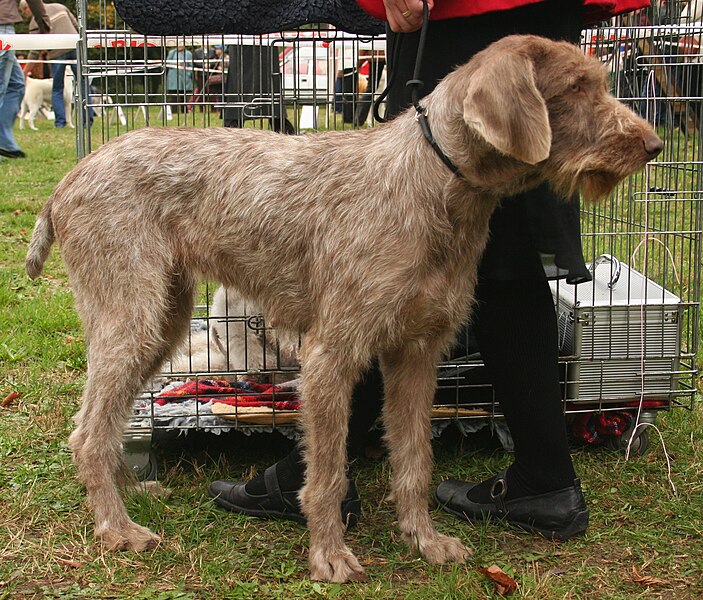
A medium to large gundog of athletic, square-ish build, standing roughly 57 to 68 cm at the shoulder and weighing around 25 to 35 kg, males larger than females. The frame is lean and muscular, built for stamina across a day's work rather than for bulk. The coat is the breed's hallmark: a harsh, close wire outer coat about 4 cm long over a dense undercoat, with a distinct beard, moustache and bushy eyebrows on the face. Colour is the characteristic grey, often described as silver-grey or liver roan, sometimes with darker or lighter shading. The head is noble with amber-toned eyes and moderately long folded ears. The overall picture is of a rugged, capable working dog.
Suitability
The Wirehaired Slovakian Pointer needs an active rural or outdoor-oriented home with plenty of space, ideally a hunting household or one committed to serious daily exercise, running and training. It is not an apartment dog and copes poorly with confinement or a sedentary lifestyle. It is best suited to experienced, energetic owners rather than first-timers, simply because of the exercise and stimulation it demands. It is a companion dog that wants to be with its people and does not tolerate long days alone, becoming restless and destructive if isolated. The wire coat offers good protection in cold and wet conditions; in the Australian heat take care to provide shade, ample water and exercise during the cooler parts of the day, and watch for overheating during hard work in summer.
Health
As a comparatively young breed from a limited gene pool, the Wirehaired Slovakian Pointer has fewer firmly documented breed-specific problems than older breeds, and typical lifespan is around 12 to 14 years. The clearest concern, shared with most medium to large active breeds, is hip dysplasia, so hip scoring of both parents is the key health check to insist on. Like other deep-chested working dogs it can be at some risk of bloat (gastric torsion). Eye conditions and skin or ear issues, the latter common in dogs with folded ears that work in water, can also occur. Because the breed is uncommon, choosing a breeder who screens hips, is honest about anything seen in their lines, and breeds for sound working temperament matters a great deal. Keeping the dog lean and fit, feeding sensibly around exercise, and routine ear care all support long-term health.
Find your Wirehaired Slovakian Pointer
Browse trusted Wirehaired Slovakian Pointer breeders across Australia and read genuine reviews from real owners, or take the quiz to be sure of the fit.