
White Swiss Shepherd Dog
Berger Blanc Suisse, White Shepherd
The White Swiss Shepherd Dog is essentially a white-coated descendant of the German Shepherd, and it shares much of that breed's intelligence and devotion while tending to be a touch softer and more sensitive in temperament. It is a medium to large working dog that bonds hard to its family and wants to be involved in everything they do. Energy and brainpower are high, so it needs real daily exercise plus training, scentwork or a job to stay balanced; a bored one becomes anxious or destructive. The medium-length double coat sheds steadily and blows heavily twice a year, so regular brushing is part of life. It suits active, committed owners who will train and include it. It is not a good choice for people away long hours, for those wanting a low-maintenance pet, or for anyone who cannot handle the shedding and the needs of a clever working breed.
Size
Medium to Large
Lifespan
12-14 years
Group
Group 5 - Working Dogs
Height
Male: 61-66 cm (24-26 inches), Female: 56-61 cm (22-24 inches)
Weight
Male: 30-40 kg (66-88 lbs), Female: 22-32 kg (49-71 lbs)
Origin
Switzerland
Compatibility & care
How this breed fits into life with you
Scores are out of 5. Tap the help icon next to any trait to see what it really means.
Personality
How they think and behave
With family
Who they get along with
Care needs
What they ask of you
Origin & history
The White Swiss Shepherd Dog descends directly from the German Shepherd. White-coated German Shepherds existed from the breed's beginnings around 1900, but the colour was eventually excluded from the German standard and discouraged, which pushed white dogs to the margins. Lines preserved in North America were exported to Switzerland, where breeders worked to establish them as a distinct breed. Switzerland recognised the Berger Blanc Suisse and the FCI accepted it as a separate breed in 2003, with the studbook anchored in Switzerland. Functionally it remains a herding and general-purpose working dog with the same heritage as the German Shepherd, simply selected for the white coat and, in many lines, a slightly gentler disposition. In Australia it is recognised and bred in modest numbers, kept by people who want the German Shepherd brain in a distinctive white package.
Temperament
This is an intelligent, deeply loyal dog that lives for its family and forms strong, sometimes intense bonds. Compared with the typical German Shepherd it is often more sensitive and softer, which makes it lovely in the right hands but means it does not suit harsh correction; it can shut down or grow anxious if handled roughly or left isolated. With its own people it is gentle, playful and patient, and it is usually very good with children it has grown up with. It tends to be reserved and watchful with strangers rather than aggressive, and it makes a naturally alert watchdog. Properly socialised it gets on with other dogs and household pets, though early exposure matters. It is highly trainable and thrives on having a purpose, whether obedience, agility, tracking or simply structured daily activity. Without enough mental and physical work it becomes nervy, barky and destructive, so engagement is not optional.
Appearance
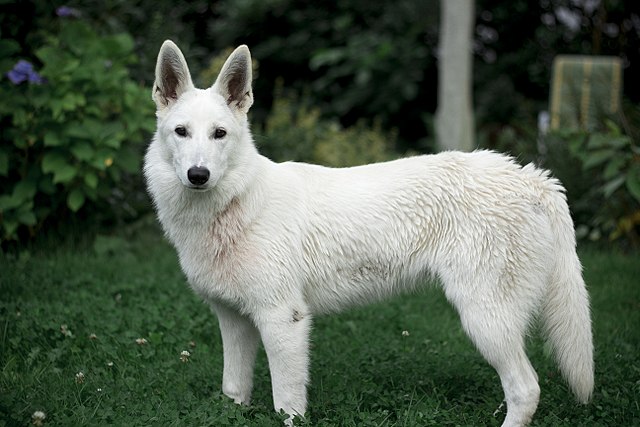
A medium to large, athletic shepherd standing roughly 55 to 66 cm at the shoulder, with males around 30 to 40 kg and females lighter. The build is moderately long, muscular and balanced, with a level topline that lacks the extreme angulation seen in some show German Shepherd lines. The coat is always white or very pale cream and comes in two lengths: a medium double coat and a longer-haired variety, both with a dense undercoat. The head is clean and wedge-shaped with dark eyes, a black nose and large erect ears. The expression is alert and friendly rather than hard. Movement is smooth, far-reaching and effortless, the mark of a true herding dog.
Suitability
This breed belongs in an active home with a securely fenced yard and an owner ready to commit to training, exercise and companionship, ideally someone home for a good part of the day. It can manage in a large apartment if thoroughly exercised, but it is a lot of dog for small spaces. It is workable for a dedicated first-time owner who does their homework, though the combination of size, drive and sensitivity is easier in experienced hands. It does not tolerate being left alone for long working days and is prone to separation distress, so it suits households where someone is around or where day care or a second dog is on offer. The dense double coat means it feels heat, so in the Australian summer provide shade, fresh water and exercise in the cool of the morning and evening, and never leave it in a hot vehicle.
Health
White Swiss Shepherds generally live about 12 to 14 years. As a German Shepherd descendant they share several of that breed's predispositions, most importantly hip and elbow dysplasia, so hip and elbow scoring of both parents is essential before you buy a puppy. Degenerative myelopathy, a progressive spinal cord disease, occurs in the breed and has a DNA test, so ask whether breeding dogs have been tested. They can also be affected by bloat (gastric torsion), being a deep-chested breed, and by some eye conditions and allergies. Responsible breeders will show you hip and elbow results, a degenerative myelopathy DNA status and ideally eye testing, and will breed for sound, confident temperament rather than nervousness. Feeding a large-breed dog appropriately, keeping it lean, and avoiding heavy exercise on a full stomach all help protect joints and reduce bloat risk.
Find your White Swiss Shepherd Dog
Browse trusted White Swiss Shepherd Dog breeders across Australia and read genuine reviews from real owners, or take the quiz to be sure of the fit.