
Porkie
Yorkie Pom, Yoranian
The Porkie is a small crossbreed between a Yorkshire Terrier and a Pomeranian, also called the Yoranian or Yorkie Pom. As a cross it is not a pedigree breed and the ANKC does not recognise it, so each dog is a mix of its two parents and can lean either way in looks and character. Typically these are lively, bold, affectionate little dogs with a big-personality attitude that far outsizes their frame. They bond closely with their people and enjoy being involved in everything. Exercise needs are small, a short daily walk and some play, but they can be vocal and benefit from early training to keep the barking and bossiness in check. They suit retirees, singles, apartment dwellers and gentle families, though not homes with very young, rough children. Grooming depends on which coat the pup inherits, but most need regular brushing.
Size
Small
Lifespan
12-16 years
Group
Not ANKC Recognised
Height
Male: 15-22 cm (6-8.5 inches), Female: 15-22 cm (6-8.5 inches)
Weight
Male: 2.7-5.4 kg (6-12 lbs), Female: 2.7-5.4 kg (6-12 lbs)
Origin
United States
Compatibility & care
How this breed fits into life with you
Scores are out of 5. Tap the help icon next to any trait to see what it really means.
Personality
How they think and behave
With family
Who they get along with
Care needs
What they ask of you
Origin & history
The Porkie is a recent designer cross rather than an established breed, the result of mating a Yorkshire Terrier with a Pomeranian to create a small, characterful companion. It rode the same wave of small-dog crossbreeding that produced many such combinations from the late 20th century on, and like all of them it has no fixed standard and is not recognised by the ANKC or other pedigree bodies. The parent breeds bring their own backgrounds: the Yorkshire Terrier began as a working ratter in the mills and mines of northern England, while the Pomeranian descends from larger Spitz sled and working dogs of the Arctic, bred down to a tiny companion. Porkies are kept purely as companion dogs. Buyers in Australia should focus on a breeder who health tests both parents rather than on the novelty of the cross.
Temperament
Porkies are confident, spirited little dogs that tend to inherit the terrier boldness of the Yorkshire and the bright, busy nature of the Pomeranian. They attach themselves firmly to their people and love being the centre of attention, which makes them engaging companions but can tip into possessiveness or yappiness without guidance. They are usually fine with older, gentle children but are easily injured by rough handling and can be snappy if hurt, so they are not the best match for toddlers. Many are bold to the point of cheekiness with bigger dogs, which needs managing for their own safety, and they can be wary and very vocal with strangers, making sharp little watchdogs. Early socialisation and consistent, reward-based training really matter with this cross, since a spoiled small dog quickly becomes a barky, demanding one. As with any crossbreed, meeting both parents helps predict temperament.
Appearance
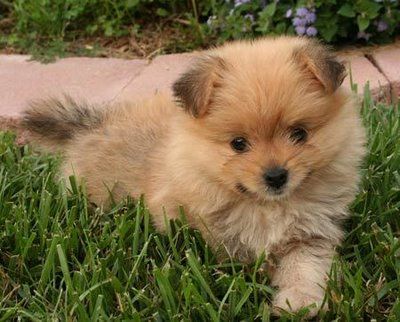
A very small dog, usually standing around 18 to 28 cm at the shoulder and weighing roughly 2 to 5 kg. The build is light and compact, often with the perky upright ears and lively expression of the Pomeranian side. The coat varies a good deal with which parent the pup favours: it may be long, fine and silky like the Yorkshire Terrier, fuller and fluffier like the Pomeranian, or somewhere between, and it is not reliably low-shedding. Common colours include black and tan, brown, sable, cream and gold, often mixed. The face is small and expressive with dark eyes and a neat muzzle. Coats are frequently kept trimmed shorter for easy upkeep.
Suitability
A natural fit for apartments and smaller homes, since the exercise needs are small and the dog wants to be indoors with its people. Porkies suit retirees, singles and gentle adult households, and they can work for families with older, considerate children, but they are too fragile and quick to react for homes with toddlers. They are companion dogs through and through and dislike being left for long days, tending towards anxious barking when bored or lonely, so a household that is home a lot suits them best. First-time owners can manage one as long as they commit to early socialisation and consistent training to curb the barking and bossiness. The small body feels the heat, so in Australian summers provide shade, fresh water and walks in the cooler parts of the day, and take care on hot pavement.
Health
As a tiny crossbreed the Porkie can be long-lived, commonly reaching 12 to 15 years, but it can inherit the health issues of both small parent breeds. Patellar luxation (slipping kneecaps) is common in both Yorkshire Terriers and Pomeranians and is the main orthopaedic concern. A collapsing windpipe (tracheal collapse) is also seen, which is part of why a harness suits these dogs better than a neck collar. Both parents are prone to dental disease given the crowded little mouth, and to eye conditions including progressive retinal atrophy and cataracts. Pomeranians can carry a risk of patent ductus arteriosus and, less commonly, a hair-loss condition sometimes called black skin disease. Buy from a breeder who has both parents' knees checked and eyes tested, ideally with DNA testing where it applies, and commit to lifelong dental care.
Find your Porkie
Browse trusted Porkie breeders across Australia and read genuine reviews from real owners, or take the quiz to be sure of the fit.