
Pomsky
Pomeranian Husky Mix
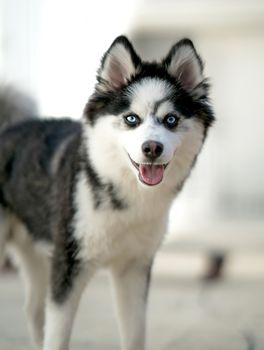
The Pomsky is a crossbreed between a Pomeranian and a Siberian Husky, almost always produced by artificial insemination because of the size difference between the parents. It is not a pedigree breed and the ANKC does not recognise it, and because it is an early-generation cross the size, coat and temperament vary enormously from dog to dog. In general Pomskies are playful, energetic and intelligent, often with the Husky's striking looks shrunk into a smaller, fluffier package. They can be affectionate and fun but also vocal, strong-willed and prone to the Husky streak of stubbornness and escapology. They suit active owners who will exercise and train them properly, not anyone after a quiet, easy lapdog. The thick double coat sheds heavily, especially in seasonal moults, and needs frequent brushing, so they are not a low-maintenance or genuinely hypoallergenic dog despite some marketing claims.
Size
Small to Medium
Lifespan
12-16 years
Group
Not ANKC Recognised
Height
Male: 25-40 cm (10-16 inches), Female: 25-38 cm (10-15 inches)
Weight
Male: 6-14 kg (13-31 lbs), Female: 6-14 kg (13-31 lbs)
Origin
Designer breed (United States)
Compatibility & care
How this breed fits into life with you
Scores are out of 5. Tap the help icon next to any trait to see what it really means.
Personality
How they think and behave
With family
Who they get along with
Care needs
What they ask of you
Origin & history
The Pomsky is a very recent designer cross that only really appeared around 2011 and 2012, when breeders in the United States began crossing Pomeranians with Siberian Huskies to recreate the Husky's looks in a smaller dog. Because of the large size gap, the cross is typically a Husky mother with a Pomeranian father by artificial insemination, and most Pomskies are first or early-generation crosses, which is why they are still so variable. It has no fixed breed standard and is not recognised by the ANKC or other pedigree registries. The parent breeds are well established: the Siberian Husky as a hardy sled dog from north-eastern Siberia, and the Pomeranian as a small companion bred down from larger Spitz-type working dogs. Pomskies are kept as companion dogs, and Australian buyers should be especially careful to use a breeder who health tests both parents.
Temperament
Pomskies are bright, lively and people-oriented, but they inherit a demanding mix of traits from two quite different parents, so temperament varies a lot. Many have the Husky's energy, talkativeness and independent, mischievous streak alongside the Pomeranian's boldness, which adds up to a clever dog that needs a job and firm, kind guidance. They bond closely with their family and can be very affectionate, and they are usually good with children they are raised alongside, though the smaller, more terrier-like individuals can be quick to react. Sociability with other dogs is generally good; small pets are a different matter, because the Husky heritage can carry a real prey drive. They are often vocal, with a tendency to howl and talk back, and many are natural escape artists. Early socialisation and consistent, motivating training are essential, as a bored Pomsky becomes noisy and destructive.
Appearance
A small to medium dog, with most adults landing somewhere around 25 to 45 cm at the shoulder and roughly 7 to 14 kg, though size is genuinely unpredictable in such an early cross. Many resemble a scaled-down Husky, with a fox-like or wolfish face, erect ears and a thick, plush double coat carried over a curled or sickle tail. Colours follow the Husky and Pomeranian palettes and include grey and white, black and white, red and white, sable and cream, sometimes with the Husky's facial mask. Eyes may be brown, blue, or one of each. Because the parents differ so much, littermates can look quite varied, and there is no guarantee a pup will keep its puppy colouring or stay small.
Suitability
Best suited to active owners and families who want an engaging, energetic dog and have time for daily exercise, training and grooming. Despite the small size, the Husky influence means many Pomskies need more activity and mental work than a typical toy breed, and a secure, well-fenced yard is wise given the breed's talent for escaping. They can adapt to apartment life only if genuinely well exercised, and their vocal nature is worth bearing in mind with close neighbours. They are not an ideal first dog for someone expecting an easy, biddable pet. Time alone is a problem too, as a bored Pomsky barks, howls and chews. The thick double coat is the big climate point in Australia: these dogs feel the heat, so provide shade, fresh water and air-conditioning on hot days, exercise them in the cool, and never leave them in a warm car or yard without relief.
Health
As a young crossbreed the Pomsky has no long health record of its own and commonly lives around 12 to 15 years, so the sensible approach is to look at what both parents can pass on. From the Pomeranian side, patellar luxation (slipping kneecaps), dental disease, collapsing windpipe and patent ductus arteriosus are the main worries. From the Siberian Husky side come several inherited eye conditions, including juvenile cataracts and progressive retinal atrophy, which is why eye testing of the Husky parent matters. Hip dysplasia is worth screening for from the Husky side as well. A responsible breeder will DNA test and eye test both parents, have knees and hips checked where relevant, and be open about the uncertainty that comes with the cross. Ask to see health results for both the Pomeranian and the Husky parent before buying.
Find your Pomsky
Browse trusted Pomsky breeders across Australia and read genuine reviews from real owners, or take the quiz to be sure of the fit.