
Aussiedoodle
Aussiepoo, Aussie Poodle Mix
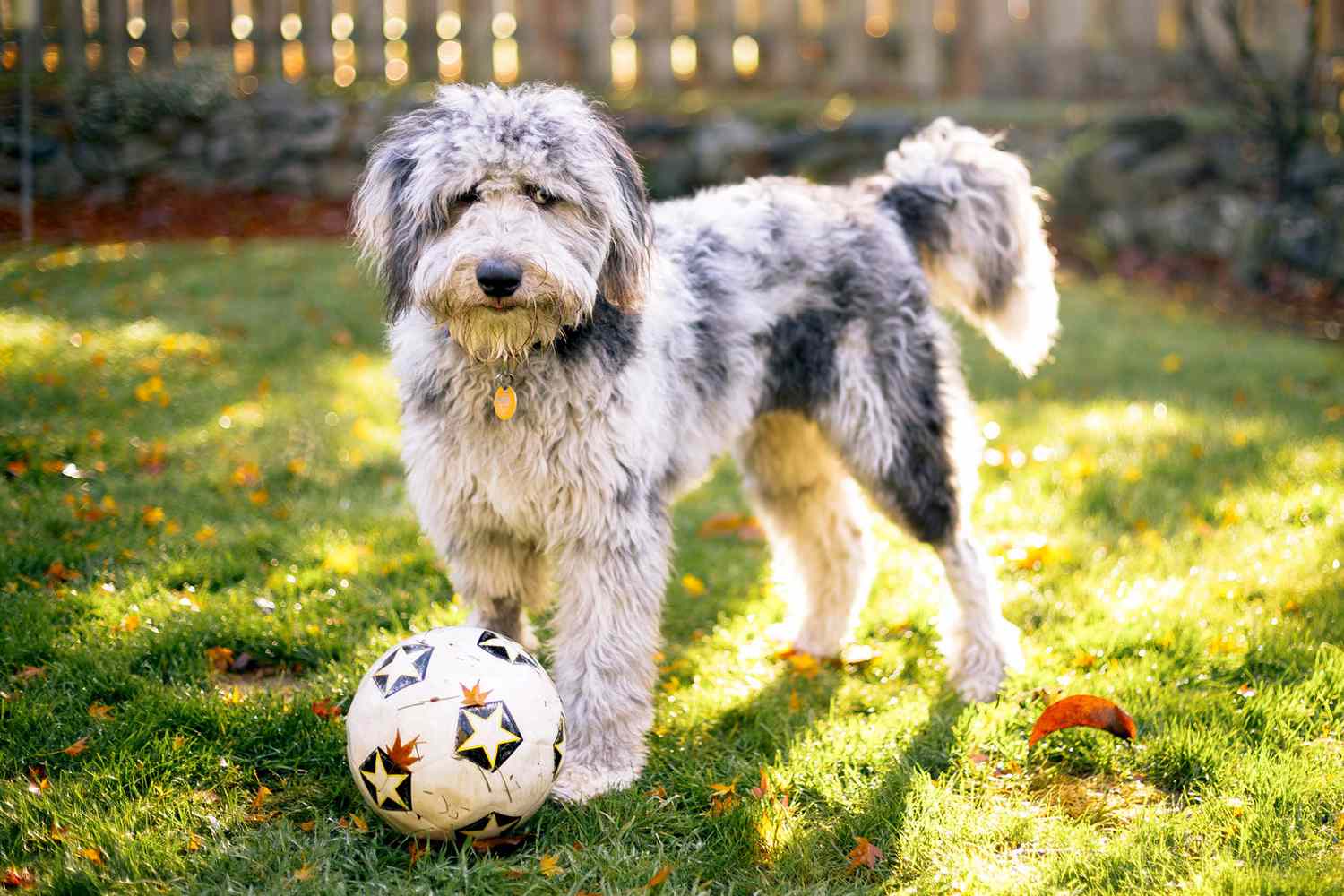
The Aussiedoodle is a cross between an Australian Shepherd and a Poodle, usually bred for an intelligent, affectionate and lower-shedding family dog. Because it is a crossbreed, individual dogs vary a lot, but most are bright, busy and very people-focused, taking the Aussie's drive and the Poodle's quick mind. That combination makes a fun, trainable companion for an active home, and a frustrated, noisy handful for a quiet one. They suit owners who want to be hands-on, train regularly and provide solid daily exercise and mental work. They are not a good fit for people who are out all day or want a calm, undemanding pet. Coats range from wavy to curly and almost always need regular brushing plus professional clipping every six to eight weeks. The ANKC does not recognise the Aussiedoodle as a pedigree breed.
Size
Medium to Large
Lifespan
10-15 years
Group
Not ANKC Recognised
Height
Medium: 46-56 cm (18-22 inches), Large: 58-64 cm (23-25 inches)
Weight
Medium: 30-45 pounds (14-20 kg), Large: 45-70 pounds (20-32 kg)
Origin
Designer breed (United States)
Compatibility & care
How this breed fits into life with you
Scores are out of 5. Tap the help icon next to any trait to see what it really means.
Personality
How they think and behave
With family
Who they get along with
Care needs
What they ask of you
Origin & history
The Aussiedoodle is a modern designer cross that emerged in North America, gaining popularity from the 1990s and 2000s alongside the wider doodle trend. The aim was to pair the Australian Shepherd, a sharp, energetic herding breed developed largely in the United States, with the Poodle, one of the most intelligent and low-shedding breeds, to produce a clever companion that might suit some allergy sufferers. There is no single breed standard, and these dogs are not eligible for ANKC pedigree registration, so quality depends heavily on the individual breeder and the parent dogs used. When considering one, treat it honestly as a cross and look closely at the health and temperament of both parents rather than relying on any guarantee about coat, size or shedding, all of which can vary even within a single litter.
Temperament
Most Aussiedoodles are sociable, affectionate and strongly bonded to their families, happiest when included in everything. They are typically good with children and other pets, especially when well socialised young, and their friendly nature usually makes them poor guard dogs, though they will often bark to announce visitors. The blend of two highly intelligent working breeds means they learn fast and excel at obedience, agility, trick training and similar pursuits, but it also means they need that brain kept busy or they invent their own jobs. The Australian Shepherd heritage can bring a herding instinct, so some will try to gather children or other animals. They tend to be eager to please and respond beautifully to positive, reward-based training. They are emotionally sensitive dogs that thrive on company and dislike being left for long stretches.
Appearance
A medium-sized dog whose exact size depends on whether a standard or miniature Poodle was used, broadly ranging from about 7 to 30 kg and 35 to 55 cm at the shoulder, with toy crosses smaller again. The build is athletic and lightly framed. The coat is the standout feature, usually wavy or curly, soft, and ranging from low to moderate shedding, though no crossbreed can be guaranteed non-shedding. Colours are varied and often striking, including black, red, chocolate, apricot, and merle patterns such as blue merle and red merle, frequently with white and tan markings. Many have the expressive, sometimes blue or partially blue eyes inherited from the Aussie side.
Suitability
An Aussiedoodle fits an active individual or family who will commit to daily exercise, training and play, ideally with a securely fenced yard, though a smaller home can work if the dog is genuinely well exercised. Their intelligence and energy can overwhelm a first-time owner who underestimates the workload, so go in with realistic expectations and ideally some training support. They form deep attachments and do not cope well with being left alone for long days, where boredom and separation distress can lead to barking and destructive behaviour. The curly coat offers some sun protection but can trap heat, so in hot Australian conditions provide shade and water, exercise in the cooler hours, and keep the coat appropriately clipped through summer.
Health
Cross-bred dogs benefit from genetic variety but still inherit the conditions common to both parent breeds, so honest health testing of the parents matters more than any hybrid-vigour claim. Likely lifespan is around 12 to 15 years. Watch for hip dysplasia and progressive retinal atrophy, both of which affect Poodles and Australian Shepherds. The Aussie side adds particular concern about the MDR1 gene mutation, which causes dangerous sensitivity to certain common medications and has a simple DNA test, and about the eye and other defects associated with merle-to-merle breeding. Poodles also contribute risks of epilepsy, patellar luxation and (in larger lines) bloat. A responsible breeder will show hip scores, eye certificates and DNA results including PRA and MDR1 on both parents, and will never mate two merle dogs together. Be cautious of breeders who lean on the designer label instead of paperwork.
Find your Aussiedoodle
Browse trusted Aussiedoodle breeders across Australia and read genuine reviews from real owners, or take the quiz to be sure of the fit.