
Cavoodle
Cavadoodle, Cavapoo
The Cavoodle (also called Cavapoo) is a cross between a Cavalier King Charles Spaniel and a Poodle, usually a Miniature or Toy Poodle. It is one of Australia's most popular companion cross-breeds, valued for pairing the affectionate, gentle nature of the Cavalier with the cleverness and lower-shedding coat of the Poodle. Cavoodles are small, sociable, people-focused dogs that are usually good with children, visitors and other pets, and they pick up training readily. Their exercise needs are moderate, met by a daily walk and a play, but they attach strongly and do not handle being left alone for long. The coat is low-shedding yet high-maintenance, needing regular brushing and professional clipping to keep it from matting. Bear in mind the Cavoodle is not a pedigree breed and is not recognised by the ANKC. Coat, size and temperament all vary, and health depends heavily on the breeding of both parent lines.
Size
Small to Medium
Lifespan
10-15 years
Group
Not ANKC Recognised
Height
Male: 23-36 cm (9-14 inches), Female: 23-36 cm (9-14 inches)
Weight
Male: 4-11 kg (10-25 lbs), Female: 4-11 kg (10-25 lbs)
Origin
United States
Compatibility & care
How this breed fits into life with you
Scores are out of 5. Tap the help icon next to any trait to see what it really means.
Personality
How they think and behave
With family
Who they get along with
Care needs
What they ask of you
Origin & history
The Cavoodle is a modern designer cross rather than an established breed, made by deliberately mating Cavalier King Charles Spaniels with Poodles to get a small, friendly, low-shedding companion. The poodle-cross trend started with the Australian-bred Labradoodle in the late 1980s, and smaller spaniel-poodle crosses like the Cavoodle followed, becoming hugely popular across Australia from the 2000s on. There is no single breed standard and no ANKC recognition, so Cavoodles are not pedigree dogs. They may be first crosses (F1), or later-generation crosses bred Cavoodle to Cavoodle. The honest way to understand one is to look at its two parent breeds: the Cavalier King Charles Spaniel, an English toy spaniel bred purely for company, and the Poodle, originally a German and French water-retrieving dog prized for its brains and curly coat. Buyers are far better off researching the health testing behind both parents than trusting the cross itself to deliver health.
Temperament
Cavoodles are usually affectionate, gentle and people-oriented, taking the sweet, sociable side of the Cavalier and the bright, biddable side of the Poodle. They generally get on very well with children, are friendly toward strangers, and mix happily with other dogs and household pets, showing little aggression. They are clever and quick to learn, do well with reward-based training, and often shine at obedience and trick work, though that same cleverness means they need mental stimulation or they get bored. Cavoodles are alert and will bark to announce visitors, but they are far too friendly to work as guard dogs. The trait that defines them is a strong need for human company. They bond intensely with their families and are prone to separation anxiety, so they do best where someone is around for much of the day. Because each dog is a mix, an individual can lean more toward one parent than the other.
Appearance
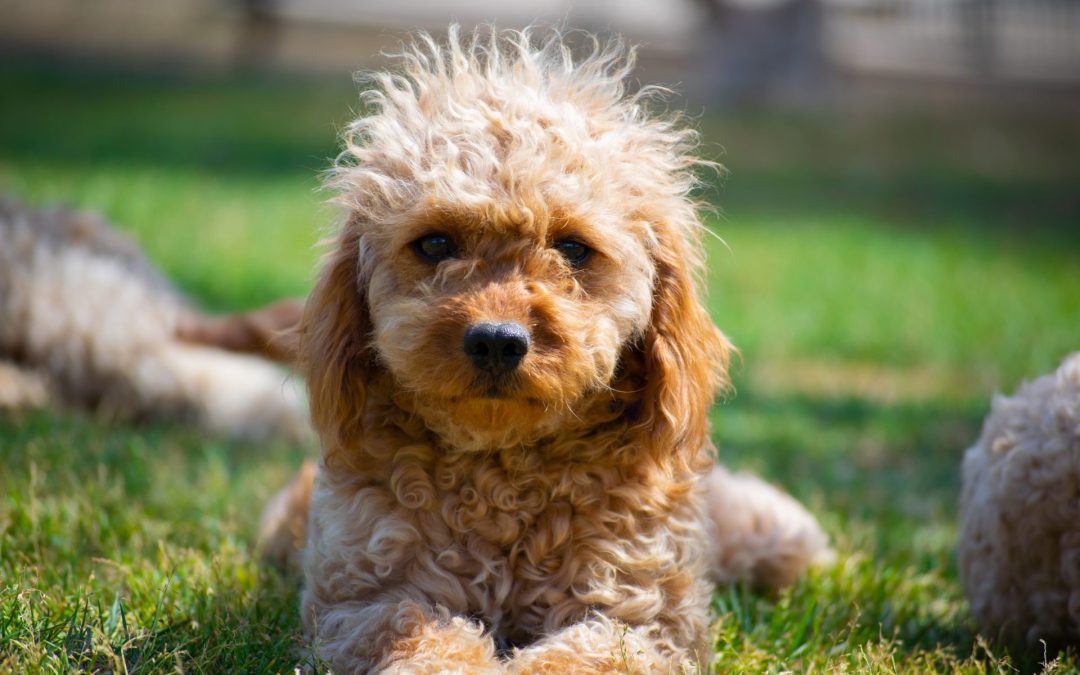
The Cavoodle is a small dog, with size depending on whether a Toy or Miniature Poodle was used. Most stand roughly 25 to 38 cm at the shoulder and weigh about 5 to 12 kg. Build is generally light and well-proportioned, with a rounded head, large dark expressive eyes and drop ears carrying feathering. The coat varies a lot between individuals, from soft and wavy through to tight curls, and is usually low-shedding, ranging from short to medium in length. Common colours include apricot, gold, ruby red, black, white, and parti-colours such as Blenheim (chestnut and white) and black-and-tan inherited from the Cavalier side. Because it is a cross-breed, appearance is not standardised and can differ even between pups in one litter.
Suitability
The Cavoodle suits a wide range of homes, flats and houses alike, and works for families, couples, retirees and first-time owners thanks to its small size, trainability and adaptable, gentle nature. Its exercise needs are modest, covered by daily walks and play. The main caution is that Cavoodles strongly dislike being left alone and can develop separation anxiety, so they are a poor fit for a home where the dog would be by itself all day. The coat copes reasonably with the Australian climate, but it is dense and holds heat, so provide shade and water and skip exercise in the hottest part of summer days. Budget for ongoing professional grooming, and choose carefully given the variability and health risks that come with an unregistered cross-breed.
Health
Cavoodles generally live around 12 to 15 years. As a cross they can inherit problems from either side, so a responsible breeder health-tests both parents. From the Cavalier side the major concerns are mitral valve disease (a serious, common heart condition) and syringomyelia with Chiari-like malformation (a painful neurological condition), along with eye disorders and luxating patella. From the Poodle side come progressive retinal atrophy, luxating patella, hip dysplasia, and conditions such as von Willebrand's disease (a bleeding disorder), with some risk of epilepsy and Addison's disease. Insist on a breeder who heart-tests the Cavalier parent (ideally by a cardiologist and following recognised heart and MRI protocols), DNA-tests for PRA, eye-tests, and patella- and hip-checks their breeding dogs. Hybrid vigour reduces but does not erase these risks, so proof of testing on both parents counts for far more than the cross itself.
Find your Cavoodle
Browse trusted Cavoodle breeders across Australia and read genuine reviews from real owners, or take the quiz to be sure of the fit.