
Dachshund (Miniature)
Miniature Dachshund, Mini Doxie
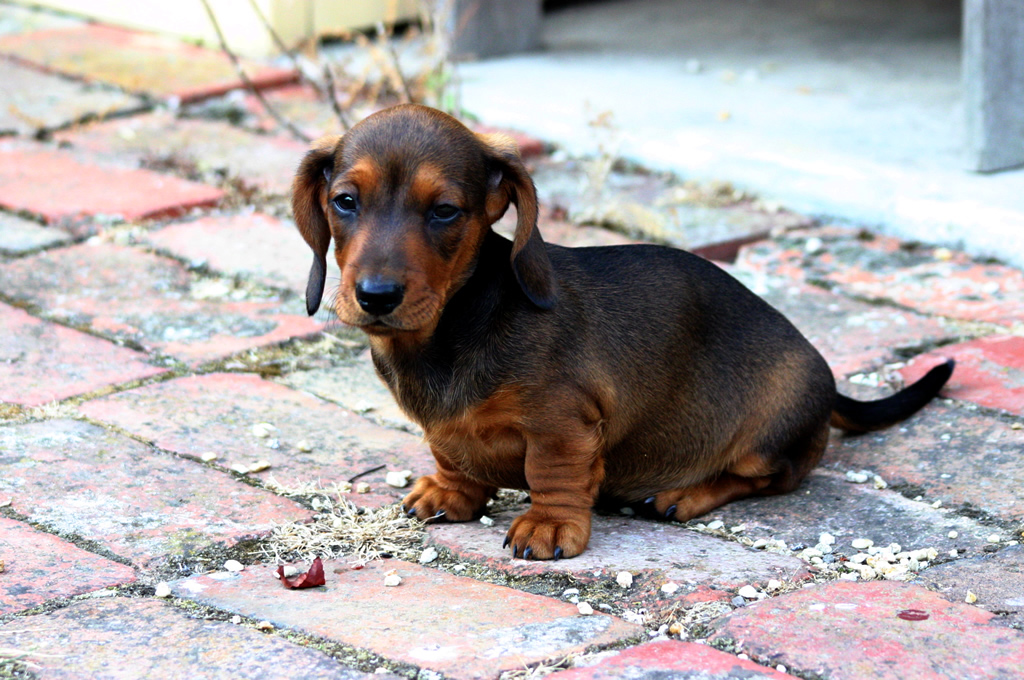
The Miniature Dachshund is the smaller version of the German badger hound, with the same long body, short legs and big personality scaled down to under about 5 kg. Bred originally to bolt rabbits and small game from their burrows, the miniature keeps a genuine scent hound''s nose, drive and stubborn streak inside a compact, apartment-friendly frame. They are bold, lively and affectionate, bonding closely to their household and often to one person in particular, and they can be surprisingly protective and vocal for their size. Exercise needs are moderate but real. They love a sniffy walk and a good game. The headline welfare issue is the back: this breed is highly prone to spinal disc problems, so jumping on and off furniture and any extra weight must be managed carefully. Grooming depends on coat type, from wash-and-go smooths to the brushing and stripping that long and wire coats require.
Size
Small
Lifespan
12-15 years
Group
Group 4 - Hounds
Height
Male: 13-18 cm (5-7 inches), Female: 13-18 cm (5-7 inches)
Weight
Male: Under 5 kg (Under 11 lbs), Female: Under 5 kg (Under 11 lbs)
Origin
Germany
Compatibility & care
How this breed fits into life with you
Scores are out of 5. Tap the help icon next to any trait to see what it really means.
Personality
How they think and behave
With family
Who they get along with
Care needs
What they ask of you
Origin & history
The Miniature Dachshund was bred down from the standard Dachshund in Germany, where the standard had been developed by the eighteenth century to hunt badgers underground. Hunters wanted a smaller dog to pursue rabbits and to work tighter burrows, so breeders selected for reduced size while keeping the working build and temperament. The name means badger dog, and every feature served the job: the long, low body to follow quarry into a tunnel, the deep chest for stamina, the loud bark so the dog could be located underground, and tough feet for digging. Like their larger relatives, miniatures come in smooth, long and wire coats, the wire developed through terrier crosses. Miniature Dachshunds are enormously popular pets in Australia, well suited to city living, though their popularity has unfortunately drawn some careless breeding that buyers need to watch for.
Temperament
For such a small dog the Miniature Dachshund has an enormous character, often described as a big dog in a little body. They are confident, brave, lively and affectionate, devoted to their families and frequently most attached to one person. With children they can be good companions when raised together and handled gently, though they will not put up with rough treatment, so supervision with young kids is sensible. Bred to work alone underground, they are independent and famously stubborn, which makes house-training and recall a genuine challenge that rewards patient, fun, reward-based training rather than force. They are alert and quick to bark, making fine little watchdogs that can tip into excessive barking. Many are wary of strangers and benefit from early socialisation. Their hound''s prey drive is strong, so small pets may be at risk and digging comes naturally.
Appearance
A very small hound of distinctive shape, long in the body and low to the ground on short, sturdy legs, with a deep chest, a tapering muzzle and long ears that hang against the cheeks. The miniature is defined by weight, sitting under about 5 kg, noticeably smaller than the standard. Three coat types occur: smooth, which is short, dense and shiny; long-haired, which is sleek with feathering on the ears, legs, chest and tail; and wire-haired, which is harsh and dense with a beard and bushy eyebrows. Colours and patterns are varied and include red, cream, black and tan, chocolate and tan, and patterns such as dapple, brindle and piebald.
Suitability
Miniature Dachshunds are well suited to apartments and small houses and to a wide range of owners, including first-timers who understand they are taking on a strong-willed little hound that needs consistent training. They are sociable and do not like being left alone for long days, tending to bark or become destructive when bored or lonely, so they fit best with someone who is around a good deal. The crucial requirement is back protection: provide ramps or steps, discourage jumping, and keep the dog lean. A secure yard suits their love of sniffing and digging. In the Australian climate the deep-chested little body overheats more readily than expected, so avoid walks in the heat of the day through summer and always provide shade and fresh water.
Health
Miniature Dachshunds typically live around 12 to 16 years, but the breed carries one major, well-established health concern: intervertebral disc disease. The long spine combined with the cartilage type common in Dachshunds makes disc rupture far more likely than in most breeds, and a severe episode can cause lasting pain or paralysis. Owners reduce the risk by keeping the dog slim, discouraging jumping from heights, using ramps and supporting the back when lifting. Other concerns include patellar luxation, and eye disease, notably progressive retinal atrophy, for which DNA tests exist for some forms. Breeding dapple to dapple can produce deaf and blind puppies and is never done by ethical breeders. When buying, ask about back health and longevity in the lines, request eye testing and patella checks, and avoid breeders producing exaggerated, extremely low and long dogs.
Find your Dachshund (Miniature)
Browse trusted Dachshund (Miniature) breeders across Australia and read genuine reviews from real owners, or take the quiz to be sure of the fit.