
Biewer Terrier
Biewer à la Pom Pon, Biewer Yorkshire Terrier, Biewer Yorkie
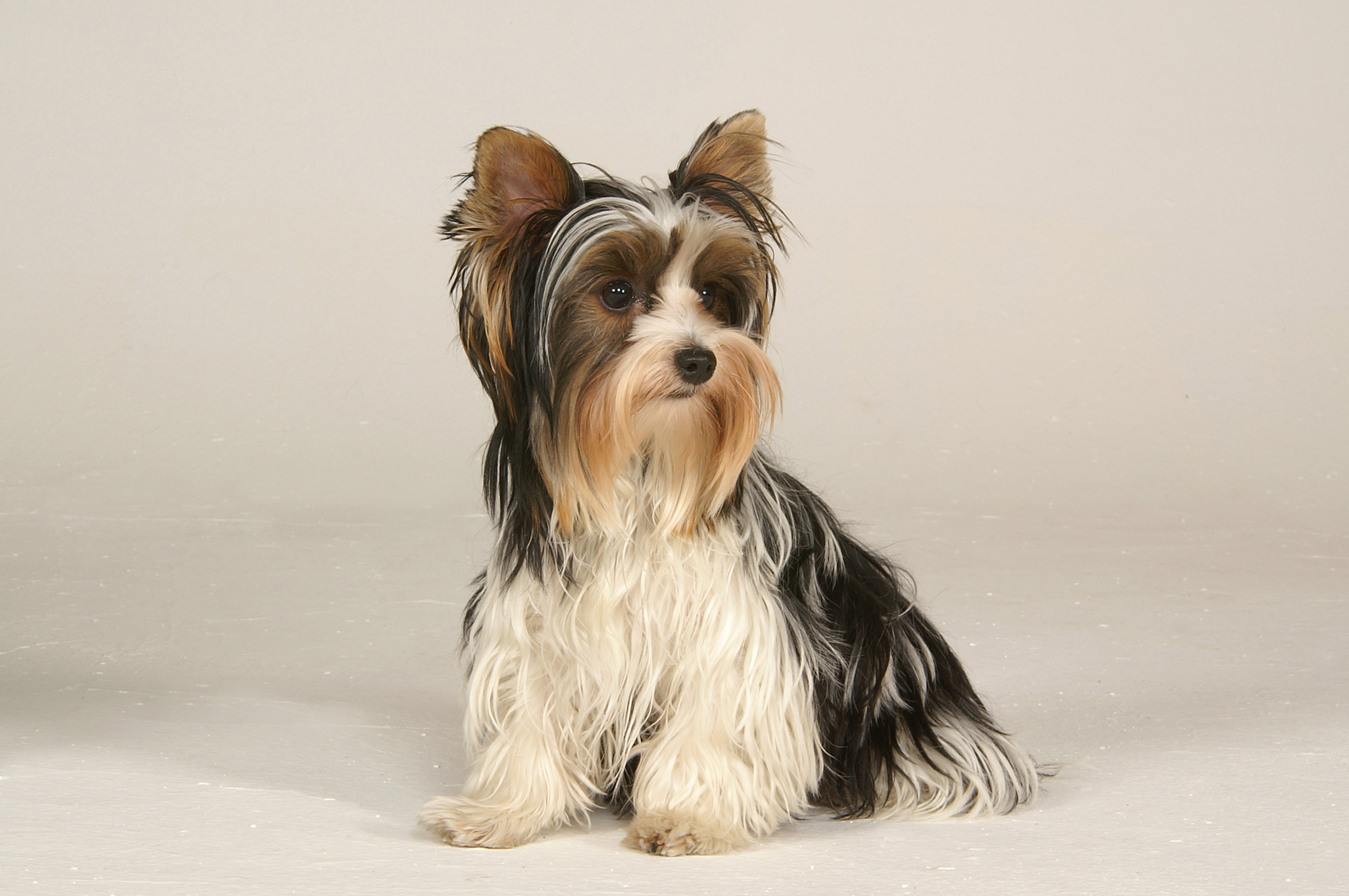
The Biewer Terrier is a small toy breed developed from the Yorkshire Terrier, distinguished by its long, silky tri-colour coat of black or blue, white and gold. These are lively, affectionate little dogs with a playful streak and a strong attachment to their people. They are happy, curious and sociable, and tend to suit individuals and families after a small, characterful companion. Exercise needs are light, a short walk and indoor play see them right, which makes them adaptable to small homes. They are not ideal for households that are out all day, as they bond closely and prefer plenty of company. The silky single coat sheds little but needs regular brushing to stay tangle-free, and many owners keep it in a shorter clip for easier care. It is worth knowing the Biewer is a recent breed and is not recognised by the ANKC.
Size
Small
Lifespan
12-15 years
Group
Group 1 - Toys
Height
Male: 58-68 cm (23-27 inches), Female: 58-68 cm (23-27 inches)
Weight
Male: 1.8-3.6 kg (4-8 lbs), Female: 1.8-3.6 kg (4-8 lbs)
Origin
Germany
Compatibility & care
How this breed fits into life with you
Scores are out of 5. Tap the help icon next to any trait to see what it really means.
Personality
How they think and behave
With family
Who they get along with
Care needs
What they ask of you
Origin & history
The Biewer Terrier is a young breed that began in Germany in the 1980s. Werner and Gertrud Biewer, long-time Yorkshire Terrier breeders, produced a puppy with unusual piebald tri-colour markings, the result of a recessive gene, and went on to develop a line of these distinctively marked dogs that took their name. For years the Biewer was treated as a colour variant of the Yorkie, but later breeders, particularly in the United States, worked to establish it as a breed in its own right, supported by genetic testing that distinguishes it from the Yorkshire Terrier. It remains uncommon and is recognised by some overseas registries but not by the ANKC, which does not list it as a pedigree breed. In Australia it is rare and found mainly through dedicated hobby breeders.
Temperament
For a small dog the Biewer has plenty of character. With its family it is affectionate, loyal and playful, forming close bonds and enjoying being part of whatever is going on. It tends to be good with gentle, sensible children, though as with any toy breed, play with young kids needs supervision because the dog is fragile and can be hurt by rough handling. Biewers are typically more outgoing and less yappy than some toy terriers, often friendly with visitors once introduced, but they will still sound off to announce someone at the door. They usually get on with other dogs and pets, especially when socialised early. They are bright, curious and trainable, responding well to reward-based methods and short, fun sessions. Their main needs are companionship, gentle handling and consistent house-training, which can take patience in small breeds.
Appearance
A small, neatly built toy dog, typically standing about 18 to 28 cm at the shoulder and weighing roughly 2 to 3.5 kg. The coat is long, straight and silky with a single layer rather than a thick undercoat, and it carries the breed's signature tri-colour pattern: a blend of black or blue, white and gold or tan, with white usually on the chest, legs and tip of the tail and a symmetrical pattern on the head. The body is compact and balanced, the eyes dark and bright, the ears small, upright and V-shaped, and the expression alert and lively. In full coat the hair can reach the ground, though a shorter pet trim is common.
Suitability
The Biewer is well suited to apartment or small-house living, making it a practical choice for city owners, singles, families with older children and seniors after a small companion. Light exercise needs and an adaptable nature mean a first-time owner can manage one, provided they are ready for the grooming and the time the dog wants. They do not enjoy being left alone all day and can become anxious or vocal if regularly isolated, so they suit a home where someone is around for much of it. Being small and fine-coated, they should be kept warm in cold snaps and, equally, kept cool and shaded through hot Australian summers, with care not to over-exercise them in the heat.
Health
Biewer Terriers generally live a long time, often 12 to 16 years, in keeping with their small size. As with most toy breeds, dental disease is a leading concern and regular tooth care is important. They can be prone to patellar luxation (slipping kneecaps), and the inherited hip condition Legg-Calve-Perthes is seen in small breeds like this. Liver shunt, where blood bypasses the liver, occurs in toy breeds and can be screened for in young dogs. Some are prone to skin or digestive sensitivities. Because the breed is small and not yet widely established, choosing a careful breeder matters: look for one who screens for patellas, does liver bile-acid testing where appropriate, and is open about the health and longevity of their lines. Ask to see the parents and any available genetic test results.
Find your Biewer Terrier
Browse trusted Biewer Terrier breeders across Australia and read genuine reviews from real owners, or take the quiz to be sure of the fit.