
Murray River Retriever
Murray Cattle Dog, Mallee Cattle Dog, Murray Heeler
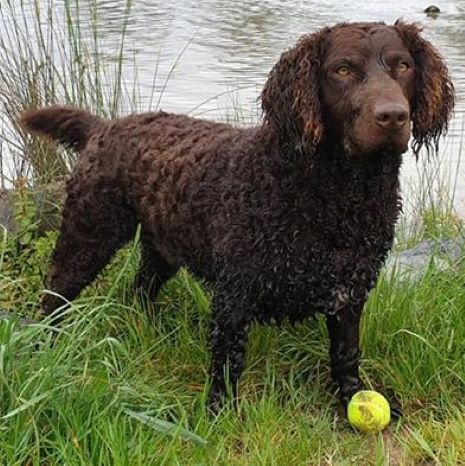
The Murray River Retriever, often called the Murray River Curly Coated Retriever, is a rare Australian gundog associated with the Murray River region and used for retrieving ducks and other waterfowl. It is a medium to large, athletic dog with a curly or wavy water-repellent coat, bred for stamina, swimming ability and a soft mouth. Temperamentally it tends to be intelligent, biddable and devoted, with the steady, trainable nature you expect of a working retriever. It needs plenty of exercise, ideally including swimming and retrieving games, and does best with active owners. This is a poorly documented and very uncommon breed not recognised by the ANKC, and records vary, so prospective owners should research carefully and speak to people who actually work and breed these dogs rather than relying on generic descriptions. The coat needs regular brushing and care after swimming.
Size
Medium
Lifespan
12-15 years
Group
Group 3 - Gundogs
Height
Male: 50-60 cm (19.5-23.5 inches), Female: 48-58 cm (19-23 inches)
Weight
Male: 20-25 kg (45-55 lbs), Female: 18-23 kg (40-50 lbs)
Origin
Australia
Compatibility & care
How this breed fits into life with you
Scores are out of 5. Tap the help icon next to any trait to see what it really means.
Personality
How they think and behave
With family
Who they get along with
Care needs
What they ask of you
Origin & history
Accounts of this breed are sparse and not always consistent, which is worth keeping in mind. The dog is linked to the Murray River system of south-eastern Australia and is generally described as a regional retriever developed by hunters who wanted a hardy water dog suited to local conditions for retrieving duck. Its background is usually said to involve curly coated and other retriever-type stock crossed and selected over generations for swimming, endurance and a gentle mouth. Numbers have always been small and it has never been a formally recognised pedigree breed, so much of its history is passed down informally rather than recorded in studbooks. It remains a niche working and companion dog kept by a small number of enthusiasts, mainly in regional Australia. Because reliable documentation is limited, claims about exact dates and origins should be treated with caution.
Temperament
As a working retriever, this dog is generally intelligent, willing and strongly attached to its people, with the calm, cooperative temperament that retrieving work demands. With family it tends to be affectionate and gentle, and well-bred, well-socialised individuals are usually good with children. With strangers most are friendly to politely reserved rather than guarding, although some have a watchful streak. Retrievers as a type usually get on well with other dogs and can live happily with other pets, especially when raised together, since they are bred to carry game gently rather than to attack it. Trainability is typically a strong point, and they respond well to reward-based methods and enjoy having a job. They are not as independent as guarding or primitive breeds and prefer to work with their owner. Their core needs are real physical exercise, ideally swimming and retrieving, mental engagement, and inclusion in family life, as a bored or under-exercised retriever can become restless and mouthy. Because the breed is so uncommon, temperament can vary, so meet the parents where you can.
Appearance
This is a medium to large, athletic retriever, broadly comparable in size to other retrievers, with most dogs standing somewhere around 50 to 65 cm at the shoulder and weighing roughly 25 to 40 kg, though there is no fixed standard and individuals vary. The build is balanced and muscular, made for swimming and a day's work. The defining feature is the coat, which is typically curly or wavy and dense, giving good protection in cold water. Coat colour is most often described as solid liver or black, sometimes with limited white. The head is workmanlike with kind, intelligent eyes and drop ears. Because the breed is not standardised, expect some variation in size, coat texture and colour from dog to dog.
Suitability
This breed suits an active, outdoorsy owner or family, ideally with access to water and space to exercise a keen retriever. A house with a securely fenced yard fits it far better than apartment life. It is reasonably suited to a committed first-time owner thanks to the typically biddable retriever temperament, provided they can meet the exercise and grooming needs. Like most retrievers it is sociable and does not enjoy being left alone all day. On the Australian climate, the dense coat gives good cold and water protection but means the dog can overheat, so exercise in the cooler parts of the day, always provide shade and fresh water, and take care during summer and in hot inland regions. Given how rare and undocumented the breed is, anyone considering one should seek out experienced owners and breeders before committing.
Health
Reliable breed-specific health data is limited because the dog is rare and unregistered, so the honest guidance is to apply the general health screening used for retrievers and water dogs. A medium to large working dog like this can reasonably be expected to live around 10 to 13 years. The conditions to be mindful of are those common to retriever-type breeds: hip dysplasia and elbow dysplasia, for which parents should have formal hip and elbow scores, and inherited eye disease such as progressive retinal atrophy and cataracts, for which breeding dogs should have eye examinations and any available DNA tests. Curly or dense coats can also predispose to skin and ear problems, so routine ear checks and coat care help. Because there is no breed-wide testing scheme, ask any breeder directly about hip and elbow scoring, eye testing and the general health and longevity of their lines, and be cautious of anyone who cannot provide evidence.
Find your Murray River Retriever
Browse trusted Murray River Retriever breeders across Australia and read genuine reviews from real owners, or take the quiz to be sure of the fit.