
Porcelaine
Chien de Franche-Comté
The Porcelaine is a French scenthound built for long days hunting hare across rough country, and that working background shapes everything about it. These are gentle, even-tempered dogs with enormous stamina and a nose that runs the show. At home they are affectionate and easy-going, but they are first and foremost a hunting hound that needs serious daily exercise and securely fenced space, because a scent will pull them away in an instant. They suit active, outdoorsy owners and rural families who can give them a real job or a lot of running, and they are a poor choice for apartments, sedentary households or anyone who wants reliable off-lead recall. The short white coat is genuinely low-maintenance, needing little more than an occasional brush, though the long ears need regular checking. This is a rare breed, seldom seen outside France.
Size
Medium
Lifespan
10-14 years
Group
Group 4 - Hounds
Height
Male: 56-58 cm (22-23 inches), Female: 54-56 cm (21-22 inches)
Weight
Male: 20-24 kg (44-53 lbs), Female: 18-22 kg (40-49 lbs)
Origin
France
Compatibility & care
How this breed fits into life with you
Scores are out of 5. Tap the help icon next to any trait to see what it really means.
Personality
How they think and behave
With family
Who they get along with
Care needs
What they ask of you
Origin & history
The Porcelaine is one of France's older scent hounds, with its modern form taking shape from the 18th century in the country's eastern regions near the Swiss border. It was bred to hunt hare and other small game in a pack, prized for a fine nose, a clear musical voice and the endurance to work difficult terrain all day. The breed nearly disappeared during the upheavals of the French Revolution and was rebuilt afterwards from the surviving stock. The name, meaning porcelain, refers to the fine, almost translucent look of the white coat over pink skin. Porcelaines remain working hounds in France and are quite rare elsewhere, including in Australia, where they are very seldom encountered. Anyone seeking one here should expect a long search and should deal only with reputable hound breeders.
Temperament
Porcelaines have the classic pack-hound temperament: gentle, sociable and even-keeled, with very little aggression in them. They form warm bonds with their family and are typically patient and good-natured with children. Raised as pack dogs, they usually enjoy the company of other dogs, though small fast-moving pets can trigger the hunting drive, so cats and the like are a gamble unless the dog is reared with them from a pup. They are friendly rather than suspicious with strangers, which makes them poor guard dogs despite a loud, carrying bark. The independence is the thing to understand: a hound on a scent is following its nose, not your commands, so recall is unreliable and training takes patience and reward-based consistency. Give them company, work and space and they are delightful; leave them bored, alone or under-exercised and you will get howling, digging and escaping.
Appearance
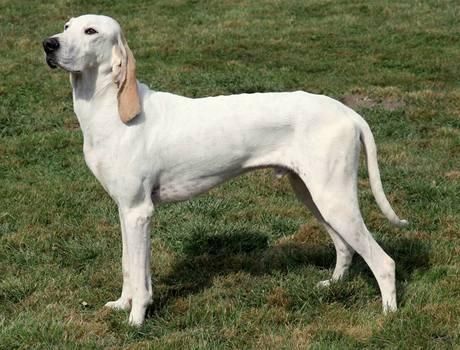
A medium-sized, finely drawn hound standing around 53 to 58 cm at the shoulder and weighing roughly 25 to 28 kg, with bitches a touch smaller. The build is elegant and athletic, with a deep chest, clean lines and long straight legs made for covering ground. The coat is very short, fine and notably glossy, fitting tightly over the body. Colour is white, ideally with orange or lemon markings, often spotted on the body and washed across the ears. The head is long and noble with a slightly domed skull, dark brown eyes with a soft expression, and long, fine, low-set ears that fold and curl in towards the muzzle. The skin is thin enough that the white coat can look faintly translucent.
Suitability
This is a country dog at heart, best suited to an active, outdoorsy owner or a rural family with room to run and a hunting or sporting outlet. A house with a large, very secure yard is essential, because Porcelaines will follow a scent under or over fencing without a backward glance, and they are not an apartment breed. They are sociable and dislike being left alone for long, doing far better with canine company or a household that is home a lot. They are not the easiest first dog, given the prey drive and patchy recall, so they suit owners with some hound or working-dog experience. The short white coat copes reasonably with Australian heat but offers little sun protection, so provide shade and water and exercise them in the cooler parts of the day in summer.
Health
The Porcelaine is generally a sound, hardy hound and tends to live around 12 to 14 years. Because it remains a small, working population there is no large body of breed-specific health survey data, so much of the guidance is the sensible general care any active hound needs. As with most medium and larger breeds, hip dysplasia is worth screening for, and parents should ideally be hip scored. The long, pendulous ears trap moisture and warmth and are prone to infection, so routine cleaning and checking is important, particularly after work in long grass. The thin coat offers little protection, so watch for cuts and grass-seed injuries. Buy from a breeder who hip scores their stock, keeps the dogs genuinely fit and healthy, and is candid about anything that has shown up in their lines.
Find your Porcelaine
Browse trusted Porcelaine breeders across Australia and read genuine reviews from real owners, or take the quiz to be sure of the fit.