
Labradoodle
Labradoodle Retriever, Labrapoo
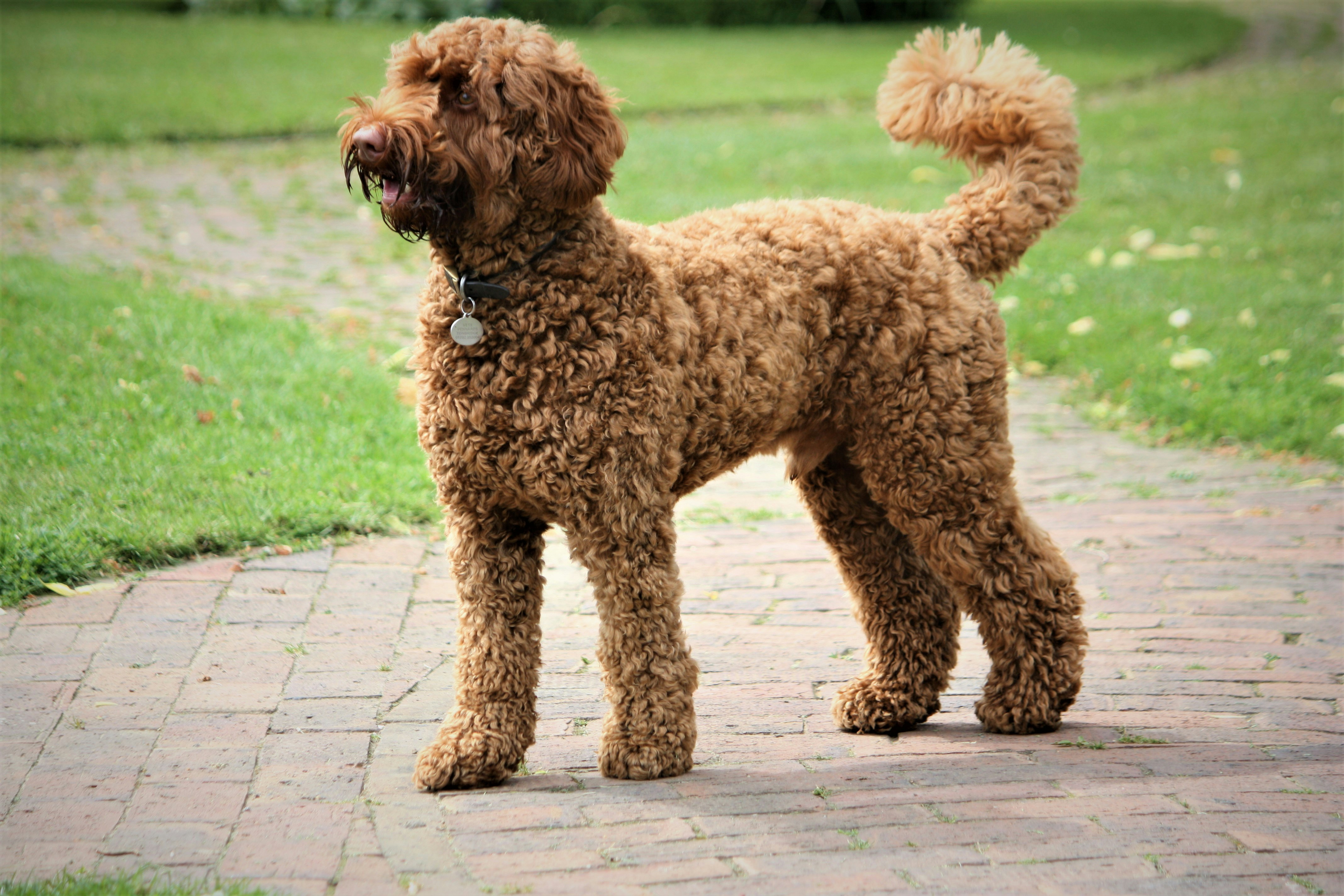
The Labradoodle is a cross between a Labrador Retriever and a Poodle (usually a Standard or Miniature), first bred deliberately in Australia. It is not a pedigree breed and the ANKC does not recognise it as one, so a Labradoodle is a first-cross or multi-generation mix rather than a standardised breed with predictable type. Most are friendly, people-focused and quick to learn, taking the Labrador's sociability and the Poodle's cleverness, which makes them popular family dogs and assistance dogs. They need real daily exercise plus mental work, and a bored Labradoodle will dig, chew and bark. They suit active households happy to train and groom, and they do not suit anyone after a low-effort dog or a reliable guard. Coats vary a lot, from wavy and shedding to tight and curly; the curlier coats are lower shedding but need regular clipping and brushing to avoid matting. A genuinely sociable, biddable temperament is the usual standout.
Size
Medium to Large
Lifespan
12-14 years
Group
Not ANKC Recognised
Height
Male: 38-56 cm (15-22 inches), Female: 35-50 cm (13-20 inches)
Weight
Male: 14-27 kg (30-60 pounds), Female: 12-23 kg (25-50 pounds)
Origin
Australia
Compatibility & care
How this breed fits into life with you
Scores are out of 5. Tap the help icon next to any trait to see what it really means.
Personality
How they think and behave
With family
Who they get along with
Care needs
What they ask of you
Origin & history
The Labradoodle was popularised in Australia in the late 1980s. Wally Conron, then working with the Royal Guide Dogs association in Victoria, crossed a Labrador with a Standard Poodle to try to produce a guide dog that might suit people with allergies to dog hair. The cross took off well beyond that original brief, and breeders here and overseas began producing Labradoodles for the pet market. Some Australian breeders went further, crossing Labradoodles back to Poodles and to each other over several generations and calling the result the Australian Labradoodle, sometimes adding other breeds such as the Cocker Spaniel. None of these are recognised as pedigree breeds by the ANKC. Coat and temperament still vary between litters and even within them, because a cross does not breed as true as an established pure breed. Conron himself later spoke publicly about his regret at the demand for crossbreeds his work helped spark.
Temperament
A well-bred Labradoodle is usually outgoing, affectionate and keen to be involved in whatever the family is doing. Most are good with children and friendly towards strangers, which makes them poor guards beyond an alert bark. They tend to get on with other dogs and pets, especially when socialised young. Trainability is generally high thanks to both parent breeds, and they respond well to reward-based methods, though the Poodle influence can bring a sensitive streak that does not suit harsh handling. They are not very independent and want company; left alone too much they can become anxious, noisy or destructive. Temperament does vary because this is a cross, so meeting both parents tells you more than any label. Key needs are daily physical exercise, plenty of mental stimulation, early socialisation and consistent, kind training.
Appearance
Size depends on the Poodle parent, ranging from a miniature dog of roughly 7 to 13 kg up to a standard of around 25 to 30 kg or more, with height varying to match. The build is athletic and lightly framed, reflecting both parents. Coats are the least predictable feature: some are straight or wavy and shed much like a Labrador, others are loose curls, and others tight and woolly like a Poodle. The lower-shedding fleece and wool coats are the ones most people picture. Colours are wide ranging and include black, chocolate, cream, gold, apricot, red, caramel, chalk and parti-colour patches. Many have the soft beard and eyebrows of the Poodle side.
Suitability
This is a dog for an active household, ideally with a house and yard, though a committed owner can keep one content in a smaller home with enough outings. The trainable nature makes many Labradoodles reasonable for first-time owners, as long as the grooming and exercise commitment is understood up front. They dislike long days alone and are happiest with regular company. In the Australian climate the woollier coats trap heat, so exercise in the cooler parts of the day, provide shade and water, and keep the coat clipped shorter through summer. Whatever the coat type, expect regular brushing and, for curly coats, professional clipping every couple of months to prevent painful matting.
Health
Most live around 12 to 15 years, with smaller ones often at the longer end. Because the Labradoodle draws on two breeds, it can inherit problems from either. From the Labrador side that means hip and elbow dysplasia and a tendency to put on weight; from the Poodle side, progressive retinal atrophy and patellar luxation, with hip dysplasia again a concern in standards. Both parent breeds can carry inherited eye disease, and DNA tests exist for several forms of PRA. Hybrid vigour is often promised but is not guaranteed, so testing matters as much here as in any pure breed. Buy only from a breeder who hip and elbow scores both parents, has their eyes checked by a veterinary ophthalmologist, and runs the relevant DNA panels (PRA and, depending on the lines, conditions such as exercise-induced collapse). Ask to see the certificates rather than taking a breeder's word for it.
Find your Labradoodle
Browse trusted Labradoodle breeders across Australia and read genuine reviews from real owners, or take the quiz to be sure of the fit.